festmény, parafrázis, ember, figuratív, horvátország, kék, olaj, Ortega, YGasset, tömegember, daVinci
Megjegyzések:
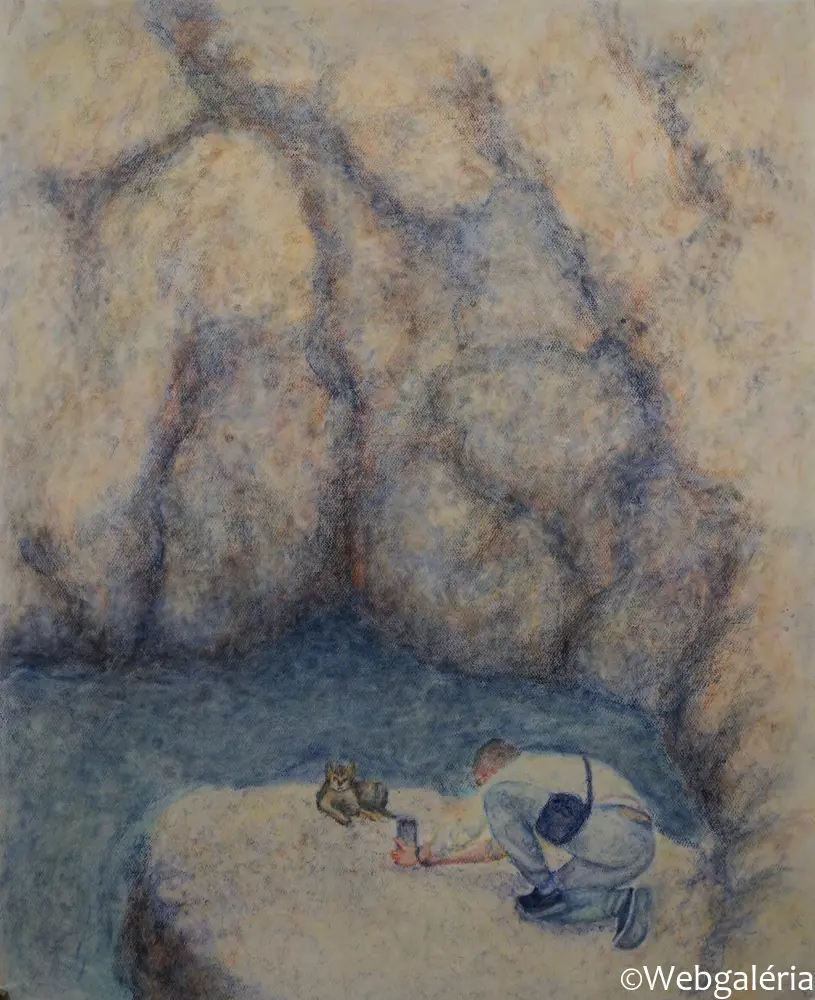
Ennek a projektnek az elsődleges motivációja az volt, hogy feldolgozzam a Splitben töltött félév alatt szerzett élményeimet. Festményeimen egy olyan világot jelenítettem meg, amit máshogy nem tudtam volna elmesélni, csak festéssel. A horvátországi tanulmányaim során parafrázisokat találtam, miközben azt vizsgáltam, hogyan viszonyulnak az emberek az őket körülvevő természethez. Olyan jeleneteket láttam a valóságban, amelyek egy-egy művészettörténeti előképnek vagy toposznak a parafrázisaiként értelmezhetők. Például Caspar David Friedrich: Vándor a ködtenger felett vagy „a három grácia” stb. Ahogy a valóság kiforgatja ezeknek az alkotásoknak az eredeti jelentését, úgy mutat rá arra az embertípusra, amelyet José Ortega Y Gasset: A tömegek lázadás című könyvében elemez, a tömegemberre.
A tömegember fogalma és jellemzése:
A tömegember fogalma nem mennyiségi, hanem minőségi meghatározás. Nem társadalmi osztály, hanem ember típus/ életforma, ami mindenféle társadalmi csoportban megjelenik. „Egyetlen személyről is megállapíthatjuk, hogy tömeg- e vagy sem.” Egy olyan embert jelent, aki nem különbözik a társaitól, hanem egy általános típust ismétel meg.
Az egyik legfőbb jellemzője az üresség. Bármilyen lehet, hiszen nincs egy megváltoztathatatlan belső lénye. Mivel csak vágyai vannak, de nincsen célja, emiatt csak sodródik az életben, ezért nem hisz az egyéni küldetésekben. Ha a körülmények nem kényszerítik rá, nem fordul senkihez, elégedett önmagával. Ráadásul „szellemileg zárkózott”. Ez nem azt jelenti, hogy ostoba, hiszen a képességei, vitális ereje nagyobbak, technikai eszközei többek, mint az előző korok embereinek, csak ezeket arra alkalmazza, hogy elkerülje azt, hogy használja az eszét. Érvényesíti és hirdeti a közönségességhez való jogot. Nem hallgat senkire, és fel sem merül benne, hogy létezik egy érdemben felette álló ember. Nem tapasztalta meg a korlátait, ezért erőszakosan kiterjeszti saját személyiségét a másik emberre. Gyökértelen, hiszen nem kötődik semmilyen korábbi történelmi múlthoz. Így csak lebeg a jelenben, mivel a múltat semmibe veszi.
Az egyéniséget igyekszik megszüntetni, amiért a társadalom egyre homogénebbé válik. Bár megvannak az eszközei, és azokat tudja használni, mivel a civilizáció alapjait nem ismeri, valójában nem képes irányítani. „Az a helyzet, hogy a világnak még sosem volt ennyi eszköze, tudása, technikája, most mégis szerencsétlenül halad, mint még soha: csupán sodródik.”(Gasset, José Ortega Y: The revolt of the masses. London, George Allen and Unwin, 1932, 47.page)
A királyok imádása (Leonardo da Vinci)
Szilágyi Júlia MegosztásÉv: 2024
Méretek: 75 x 94 cm
Technika: pasztell, papírGasset, José Ortega Y: The revolt of the masses. London, George Allen and Unwin, 1932, 47.page
Ár: n.a.