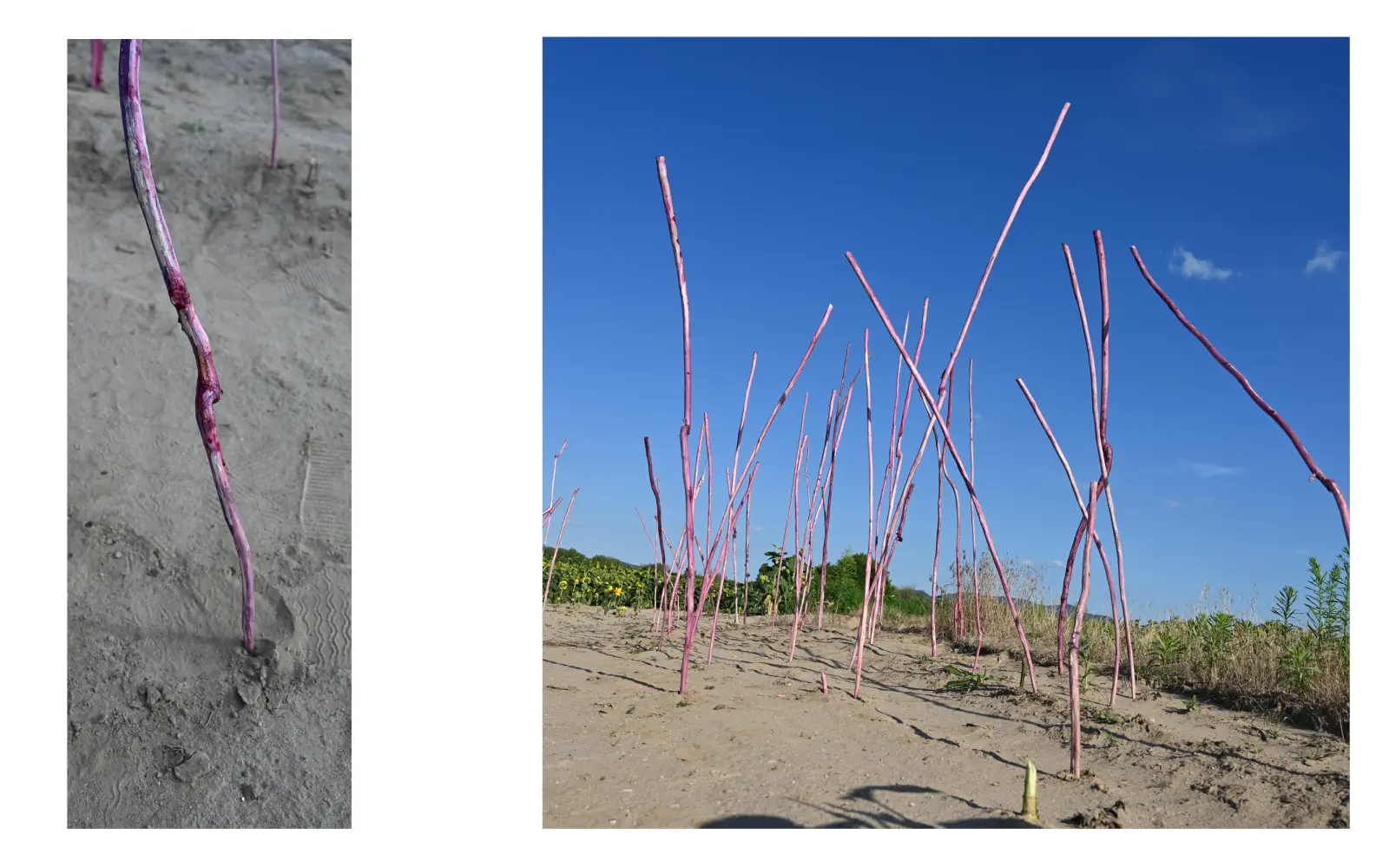
installáció, növényi, pigemnetek, konceptuális, landart
Megjegyzések:
Ez a munka az installáció nyelvi és anyagi rétegzettsége mentén épül fel. A cím szétvágja a jelentést: „bokorkasza” – két szó, amely egyszerre idéz archaikus agrártörténetet és technikai erőszakot.
Az installáció alapanyaga a mirigyes bálványfa – egy „invazívként” megbélyegzett, allelopátiás növény, amely városi repedésekből, betontömbök közül tör elő, építkezési területeken is gyökeret ver, dacolva minden emberi törekvéssel. A bálványfa darabjai olyan helyekről származnak, ahol amúgy is kivágásra kerültek volna: a mű így a feleslegessé tett, kirekesztett anyagot értelmezi újra. A festés átírás: egy őshonos, Európában kultúrálisan sokrétű jelentést hordozó növényből származik (népi nevén: festőbodza vagy feketebodza). Ez a gesztus a bálványfa „ellenséges” státuszával állítja szembe a gyógyító és helyi hagyományhoz kötődő jelentésréteget.
A Falcastrum „tér hímzéseként” is értelmezhető: a földbe szúrt, megfordított fák mintha szálak lennének, amelyek új mintát rajzolnak a táj szövetébe. A cselekvés mintázat-alkotásként írható le: minden kivágott fa egy új öltésként illeszkedik a térbe, lassú, ismétlődő gesztus részeként. A hímzés metaforája itt nemcsak kézműves hagyományt, hanem gondoskodó átírást jelent: a tér átalakítását szálról szálra, motívumról motívumra.
Falcastrum
Mazán Anikó MegosztásÉv: 2025
Méretek: 210x170x200 cm
Technika: installáció
Ár: n.a.
Magántulajdon
Fotós: Szőke Erika